








How to Upgrade Your Water to Help Support Bone Health After Menopause
|
|
Time to read 7 min
|
|
Time to read 7 min
Table of Contents
You take your calcium. You make sure to get your vitamin D. You know that bone health matters more after menopause, and you are doing what you have been told to do.
But here is something most women are never told: the type of water you drink every day may also play a meaningful role in how well your bone health holds up after menopause. Not as a replacement for what you are already doing, but as a powerful addition that most conversations about this topic completely overlook.
Menopause marks one of the most significant shifts in a woman's body. When estrogen levels decline, the body's ability to maintain bone density declines with it. According to the National Institutes of Health, women can lose up to 20% of their bone density in the five to seven years following menopause, making this one of the most critical windows for support.
Bone is living tissue. It is constantly being broken down and rebuilt in a process called remodeling. In younger women, this process stays relatively balanced. After menopause, the balance shifts. Bone resorption, the process of breaking down old bone, begins to outpace the formation of new bone. The result is a gradual but measurable loss of density that increases the risk of fractures, osteoporosis, and reduced mobility over time.
What most women do not realize is that the body's internal pH environment plays a direct role in this process. When the body becomes too acidic, it draws alkaline minerals including calcium from bones to restore balance. Over time, this quietly accelerates skeletal decline in ways that most routines do not address.

Understanding the factors that drive density loss after menopause is the first step toward addressing them more completely. Here is what most commonly disrupts bone health in postmenopausal women.
Estrogen plays a critical role in regulating the bone remodeling cycle. According to MedlinePlus, the decline in estrogen during and after menopause directly accelerates bone resorption, reducing the body's ability to maintain bone density over time. Here is how estrogen decline affects bone health:
The body works constantly to maintain a healthy internal pH balance. When the diet is high in acidic foods and the body's buffering systems are overwhelmed, it turns to bones as a reservoir of alkaline minerals to restore balance. According to the Arthritis Foundation, bones are highly sensitive to changes in pH, and in an acidic environment, new bone does not form as efficiently while existing bone breaks down more rapidly. Here is how an acidic internal environment affects bone health:
Postmenopausal women are particularly vulnerable to nutritional deficiencies that directly impact bone health. According to UCLA Health, as the body ages, its ability to absorb and utilize nutrients efficiently declines, making the quality of what you consume increasingly important. Here is how nutritional gaps affect bone health after menopause:
Most bone health conversations focus on calcium, vitamin D, and exercise. But a growing body of research suggests that alkaline water may be a meaningful and underutilized addition to this picture.
A clinical study published in the Journal of Menopausal Medicine (Fasihi et al., 2021) examined the effect of alkaline drinking water on bone mineral density in 100 postmenopausal women diagnosed with osteoporosis. Participants were divided into two groups of 50. Both groups received standard osteoporosis treatment including calcium D and medication. The intervention group additionally consumed 1.5 liters of alkaline water daily at a pH of 8.6 for three months.
After three months, the results were significant. The intervention group showed measurably improved spine T-scores compared to the control group. The researchers concluded that drinking alkaline water improves bone density in postmenopausal women with osteoporosis and may be used as a complementary approach to supporting bone health.
The connection makes biological sense. Alkaline water helps support a less acidic internal environment, reducing the body's need to draw calcium from bones to restore pH balance. When the body is better buffered, bones are better protected.

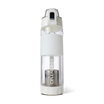
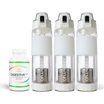
Most women who want to support their bone health with alkaline water do not have a convenient, reliable way to get it every day. The CELLNERGY HYDRATION SYSTEM was designed to change that.
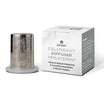
The CELLNERGY HYDRATION SYSTEM by LifePharm transforms ordinary filtered water into active, structured, hydrogen-rich alkaline water through three advanced technologies:
According to GoodRx, research has found that alkaline water may provide better rehydration than regular tap water, as measured by blood concentration markers. Better cellular hydration means better transport of the minerals and nutrients that bone health depends on, supporting the full benefit of everything else you are already doing for your bones.
Bone health after menopause requires consistent, multi-layered support. Calcium and vitamin D lay the foundation. But addressing the body's internal pH environment, supporting cellular hydration, and ensuring minerals are efficiently absorbed are pieces of the puzzle that most routines leave out.
The research is clear that alkaline water can play a meaningful role in supporting bone density for postmenopausal women. The CELLNERGY HYDRATION SYSTEM makes it easy to incorporate that support into your daily routine, one optimized glass at a time.
After menopause, bone density declines significantly as estrogen levels fall and bone resorption outpaces bone formation.
An acidic internal environment accelerates bone loss by drawing calcium from bones to restore pH balance, a factor most bone health routines do not address.
A clinical study published in the Journal of Menopausal Medicine found that postmenopausal women who consumed alkaline water daily for three months showed significantly improved spine bone density scores compared to the control group.
The CELLNERGY HYDRATION SYSTEM delivers alkaline water through Mineral-Based Alkalization, Molecular Hydrogen Infusion, and Terahertz-Frequency Conditioning, supporting bone health from the inside out.*
Better cellular hydration supports more efficient mineral absorption and nutrient transport to bone tissue, amplifying the benefits of an already strong bone health routine.*
According to a clinical study published in the Journal of Menopausal Medicine (Fasihi et al., 2021), postmenopausal women who consumed alkaline water daily for three months showed significantly improved spine T-scores compared to those who did not. Alkaline water supports a less acidic internal environment, reducing the body's need to draw calcium from bones to restore pH balance.
No. The CELLNERGY HYDRATION SYSTEM is designed to complement an existing bone health routine, not replace it. Calcium and vitamin D remain important foundations. The CELLNERGY HYDRATION SYSTEM adds the benefits of alkaline water, cellular hydration, and molecular hydrogen to support the conditions in which those nutrients can be absorbed and utilized more effectively.*
The CELLNERGY HYDRATION SYSTEM transforms ordinary filtered water into alkaline, hydrogen-rich structured water through three technologies: Mineral-Based Alkalization, Molecular Hydrogen Infusion, and Terahertz-Frequency Conditioning. Together these support a healthy pH environment, cellular antioxidant defense, and optimized hydration efficiency at the cellular level.*
Fill with room-temperature filtered or purified water, allow 15 minutes for conditioning, and consume throughout the day. The clinical study supporting alkaline water and bone density used 1.5 liters of alkaline water daily, making consistent daily use the most effective approach for long-term bone health support.*
LifePharm, Inc.
Our purpose is to offer healthy living and sustainable income for everyone.

MADE IN
U.S.A.

60-DAY MONEY BACK GUARANTEE

MADE IN A FDA REGISTERED FACILITY

CLINICALLY
STUDIED
CURRENT GOOD
MANUFACTURING
PRACTICE

CLEAN LABEL
CERTIFIED
MADE IN
U.S.A.
60-DAY MONEY BACK GUARANTEE
MADE IN A FDA REGISTERED FACILITY
CLINICALLY
STUDIED
CURRENT GOOD
MANUFACTURING
PRACTICE
CLEAN LABEL
CERTIFIED


