










Could Dehydration Be Behind Your Brain Fog?
|
|
Time to read 6 min
|
|
Time to read 6 min
Table of Contents
You sit down to work and stare at the screen. The words are there but your brain just will not connect. You forget what you walked into a room for. You read the same sentence three times. You feel mentally slow, scattered, and exhausted even though you slept last night.
That feeling has a name: brain fog. And while most people chalk it up to stress, poor sleep, or just being busy, one of the most common and overlooked causes is something far simpler. You might just be dehydrated.
Brain fog is not a medical diagnosis. It is a term used to describe a cluster of cognitive symptoms that make it difficult to think clearly, focus, and function at full capacity. According to The EDS Clinic, brain fog can include difficulty concentrating, memory lapses, mental fatigue, slow processing, and a general sense of mental cloudiness that interferes with daily life.
It is more than just feeling tired. Brain fog can affect your productivity, your mood, your relationships, and your overall quality of life. And when it becomes a regular occurrence, it is worth paying attention to what might be causing it.

The brain is approximately 75% water. It is one of the most water-dependent organs in the body, and even small changes in hydration levels can have a significant impact on how it functions. According to the Alzheimer's Drug Discovery Foundation, dehydration can impair a range of cognitive functions including attention, memory, and processing speed, the exact abilities that suffer most during episodes of brain fog.
According to Arbor Health, the brain relies on adequate hydration to maintain the electrochemical signals that allow neurons to communicate. When fluid levels drop, these signals slow down and so does your thinking.
A study published in Nutrients found that even mild dehydration, a fluid loss of just 1 to 2% of body weight, was sufficient to impair cognitive performance, including attention, psychomotor skills, and immediate memory. The researchers noted that these effects occurred even before the sensation of thirst set in, meaning most people are already experiencing brain fog before they realize they need to drink.
A self-controlled trial published in PLOS ONE (Zhang et al., 2019) found that dehydration significantly impaired cognitive performance and mood among college-aged participants, while rehydration led to measurable improvements in both areas. According to a review published in PubMed, cognitive performance and dehydration are closely linked across multiple domains including reaction time, attention, and short-term memory.
Brain fog does not always look the same. Depending on the person and the day, it can show up as an inability to focus, a frustrating lapse in memory, or a creeping sense of mental exhaustion that makes even simple tasks feel overwhelming. According to Minneapolis Clinic, signs of dehydration-related brain fog include difficulty concentrating, slowed thinking, and reduced ability to stay on task. According to the Women's Brain Health Initiative, dehydration negatively impacts both short-term memory and overall mental sharpness. And according to Trinova Medical, dehydration has also been linked to increased irritability and mental fatigue that compound the experience of brain fog. Here is how poor hydration affects the brain day to day:
The quality and efficiency of your hydration matters just as much as how much you drink. A study published in the American Journal of Clinical Nutrition found that fluid intake had a meaningful impact on cognitive performance and mood, reinforcing that how well you hydrate directly influences how clearly your brain operates throughout the day.
The brain needs water that is efficiently absorbed at the cellular level to maintain optimal function. Simply drinking more water at the point of experiencing brain fog may not reverse the cognitive effects quickly enough, which is why the quality of your water matters.

Not all water hydrates the body equally. Alkaline water, which has a higher pH than regular tap water, typically above 7.0, contains naturally occurring minerals like calcium and magnesium that may support the body's ability to absorb and retain water more effectively.
According to GoodRx, research has found that alkaline water may provide better rehydration than regular tap water, as measured by blood concentration markers following exercise. A study published in Biology of Sport (Chycki et al., 2017) found that athletes who consumed alkaline water demonstrated improved hydration status and more efficient metabolic recovery compared to those who drank regular table water, suggesting that the mineral content and pH of water influence how effectively the body absorbs and utilizes it.
For brain fog specifically, this matters because cognitive function depends on how efficiently water reaches and is used by neurons. When water is optimized at the cellular level, the brain's electrochemical signaling, nutrient delivery, and overall cognitive performance are better supported. Here is what alkaline water may support compared to regular water:
The brain is one of the most hydration-sensitive organs in the body. When it does not receive water that is efficiently absorbed at the cellular level, the result is slower thinking, reduced focus, and the kind of brain fog that no amount of coffee seems to fix.
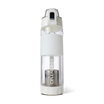
The CELLNERGY BOTTLE by LifePharm was built with this in mind. Rather than simply delivering water, it conditions water at the molecular level to support more effective cellular hydration through three advanced technologies:
When the brain receives water that is absorbed more effectively at the cellular level, its electrochemical signaling functions more efficiently, nutrients are delivered more reliably, and the cognitive clarity that dehydration disrupts is better maintained throughout the day.
Most people searching for a solution to brain fog look everywhere except their water. They adjust their sleep schedule, cut back on caffeine, or try a new supplement. But if the water they are drinking every day is not being efficiently absorbed at the cellular level, the brain will continue to fall short of what it is capable of.
Dehydration impairs cognitive function, affects mood, and slows the brain in ways that most people never connect to their daily water intake. The CELLNERGY BOTTLE offers a simple, daily way to address this at its source, optimizing every glass of water you drink to support the mental clarity your brain needs to function at its best.
Brain fog is a common but often overlooked condition characterized by difficulty concentrating, memory lapses, and mental fatigue.
Dehydration is one of the most common and underrecognized causes of brain fog, with research showing that even mild fluid loss impairs cognitive performance.
Drinking more water is not always enough. Alkaline water and cellular-level hydration efficiency play a key role in how well the brain functions.
The CELLNERGY BOTTLE by LifePharm is designed to optimize water at the cellular level, supporting mental clarity, focus, and cognitive performance.*
Research consistently links even mild dehydration to impaired attention, memory, processing speed, and mood, all of which contribute to the experience of brain fog. The brain is approximately 75% water, making it particularly sensitive to even small changes in hydration status.
Common signs include difficulty concentrating, slow thinking, memory lapses, mental fatigue, irritability, and a general sense of mental cloudiness. Many people experience these symptoms of brain fog regularly without connecting them to their hydration habits.
The CELLNERGY BOTTLE optimizes water at the cellular level through mineral-based alkalization, molecular hydrogen infusion, and Terahertz-Frequency Conditioning. These technologies support more efficient cellular hydration, helping water reach the brain and body cells where it is needed most to support cognitive function and mental clarity.*
For best results, use the CELLNERGY BOTTLE daily, especially when taking your LifePharm supplements. It is designed as an integrated daily regeneration tool within the LifePharm ecosystem, supporting improved bioavailability and nutrient delivery throughout the body.*
LifePharm, Inc.
Our purpose is to offer healthy living and sustainable income for everyone.

MADE IN
U.S.A.

60-DAY MONEY BACK GUARANTEE

MADE IN A FDA REGISTERED FACILITY

CLINICALLY
STUDIED

CURRENT GOOD
MANUFACTURING
PRACTICE

CLEAN LABEL
CERTIFIED
MADE IN
U.S.A.
60-DAY MONEY BACK GUARANTEE
MADE IN A FDA REGISTERED FACILITY
CLINICALLY
STUDIED
CURRENT GOOD
MANUFACTURING
PRACTICE
CLEAN LABEL
CERTIFIED


